A Glimpse into Campus Projects
Over the years, Rice University has supported a wide range of projects that use the campus as a space for exploration, learning, and innovation. These efforts span disciplines and approaches, offering creative solutions to real-world challenges while enriching the university community. The examples featured here represent just a small selection of the many projects that have taken place—each one helping to illustrate the diverse possibilities for engaging with the campus in meaningful ways.
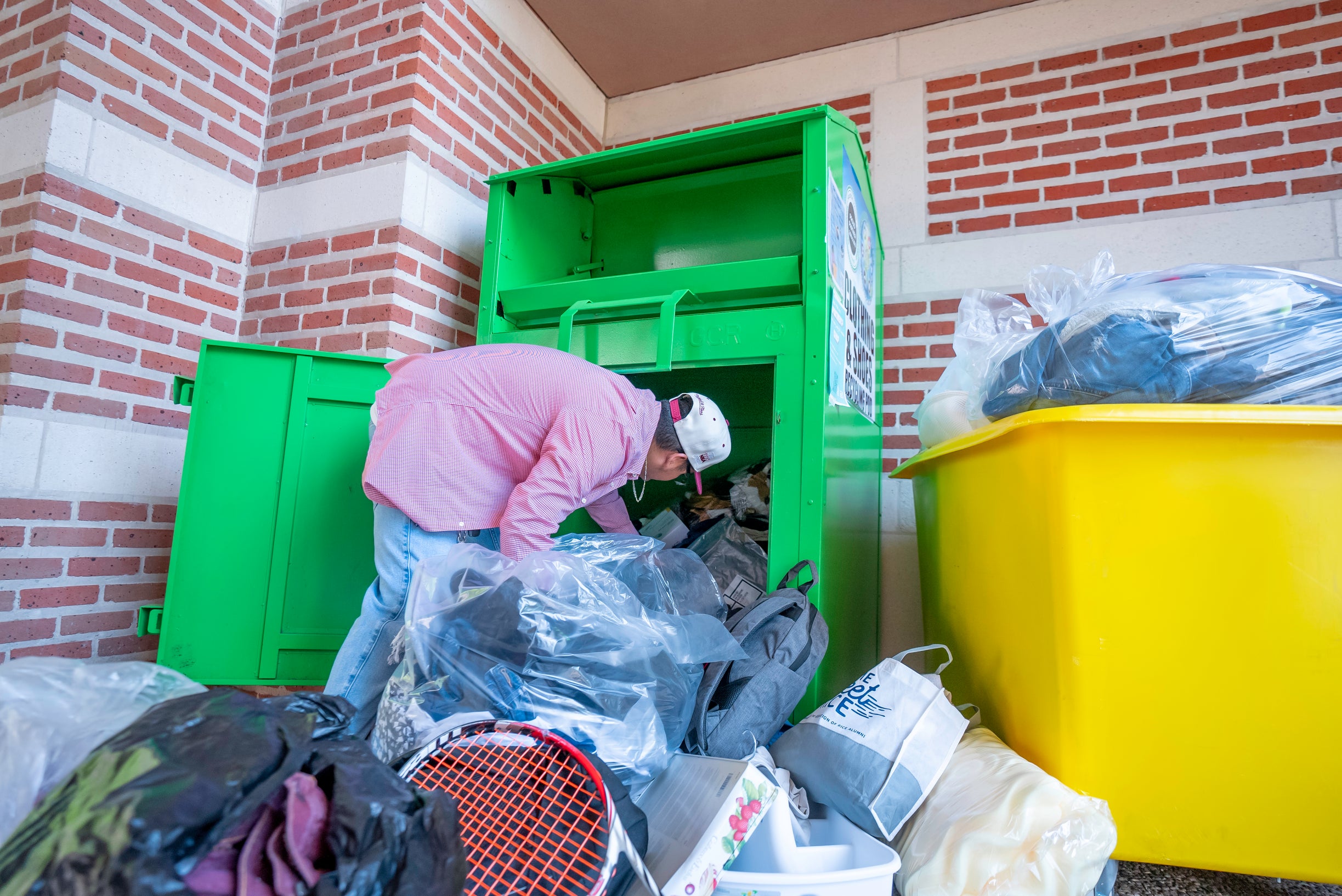
Project: Give a Hoot! Donate Your Loot! Move-out Campaign
Project Type: Course Project (ENST 302/SOCI 304)
Description: Give a Hoot! Donate Your Loot! is Rice University’s signature move-out waste diversion campaign, empowering students, faculty, and staff to donate gently used items instead of discarding them. Launched in 2023 as a student-led initiative, the program has rapidly grown into a campus-wide movement that promotes sustainability, equity, and community engagement. Collection bins are placed throughout campus at the end of each semester and collected by Green City Recycler.
Results: The program has been an immense success, Since its launch in 2023, Give a Hoot! Donate Your Loot! has earned prestigious recognition for its leadership in sustainability and community engagement. The campaign received the Mayor's Proud Parnter Award from Keep Houston Beautiful in 2023 and was named the 2025 Outstanding Program of the Year by Keep Texas Beautiful. As of July 2025, the initiative has successfully diverted over 32,000 pounds of durable goods from landfills.
Project: Green Roof Review on Stormwater Runoff and Flood Mitigation
Project Type: Research Project (SSPEED Center)
Description: The SSPEED Center collaborated with the City of Houston to develop design guidelines in support of the Green Stormwater Infrastructure (GSI) Incentive Program. This multidisciplinary, short-term research initiative aimed to enhance Houston’s urban flood resilience amid ongoing urban growth. The project leveraged data from previous Green Infrastructure projects on the Rice University campus, where systems were actively monitored. Additionally, existing Green Infrastructure installations at Rice were used to collect data on variables such as green roof runoff attenuation, runoff losses, and water quality.
Results: The collaborative effort between the SSPEED Center and the City of Houston resulted in the development of data-driven recommendations for more accessible and effective design parameters. These findings were intended to inform and incentivize the construction of additional green and sustainable infrastructure throughout the city.
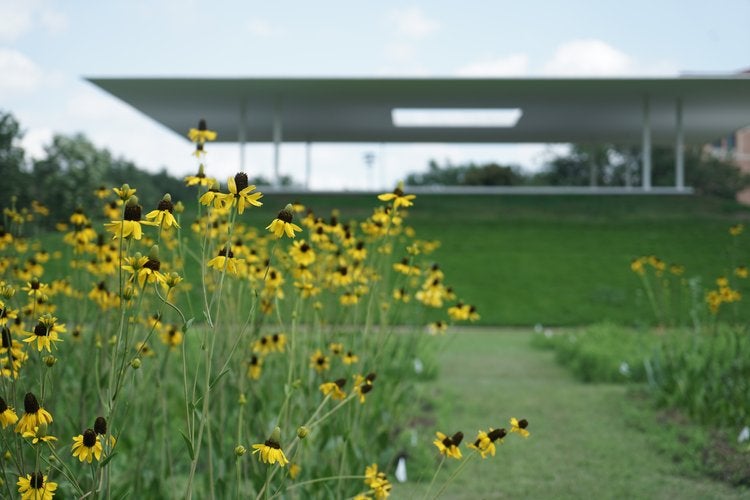
Project: Prairie Plots
Project Type: Research Project (Maggie Tsang)
Description: Prairie Plots is a collaboration between Rice Architecture and Grounds within Facilities & Capital Planning. Initiated in 2022, the project is a living installation that explores the social, environmental, and cultural dimensions of alternative landscape maintenance and land care practices. The installation replaces a 10,000 square foot area of mowed turf lawn with a prairie landscape, reducing the environmental impact of mowing and irrigation and growing biodiversity and soil health.
Results: Since its installation, the project has diverted maintenance-intensive turf into a biodiverse habitat, improving soil health, increasing pollinator activity, and reducing irrigation needs. It has also fostered strong community engagement through seasonal land care events, student-led monitoring of ecological health, and public education via exhibitions and publications. Recognized with a 2022 award from the Architectural League of New York and the 2025 Texas ASLA Award of Excellence for Research, Prairie Plots stands as a model for sustainable campus design and climate-resilient urban landscapes.
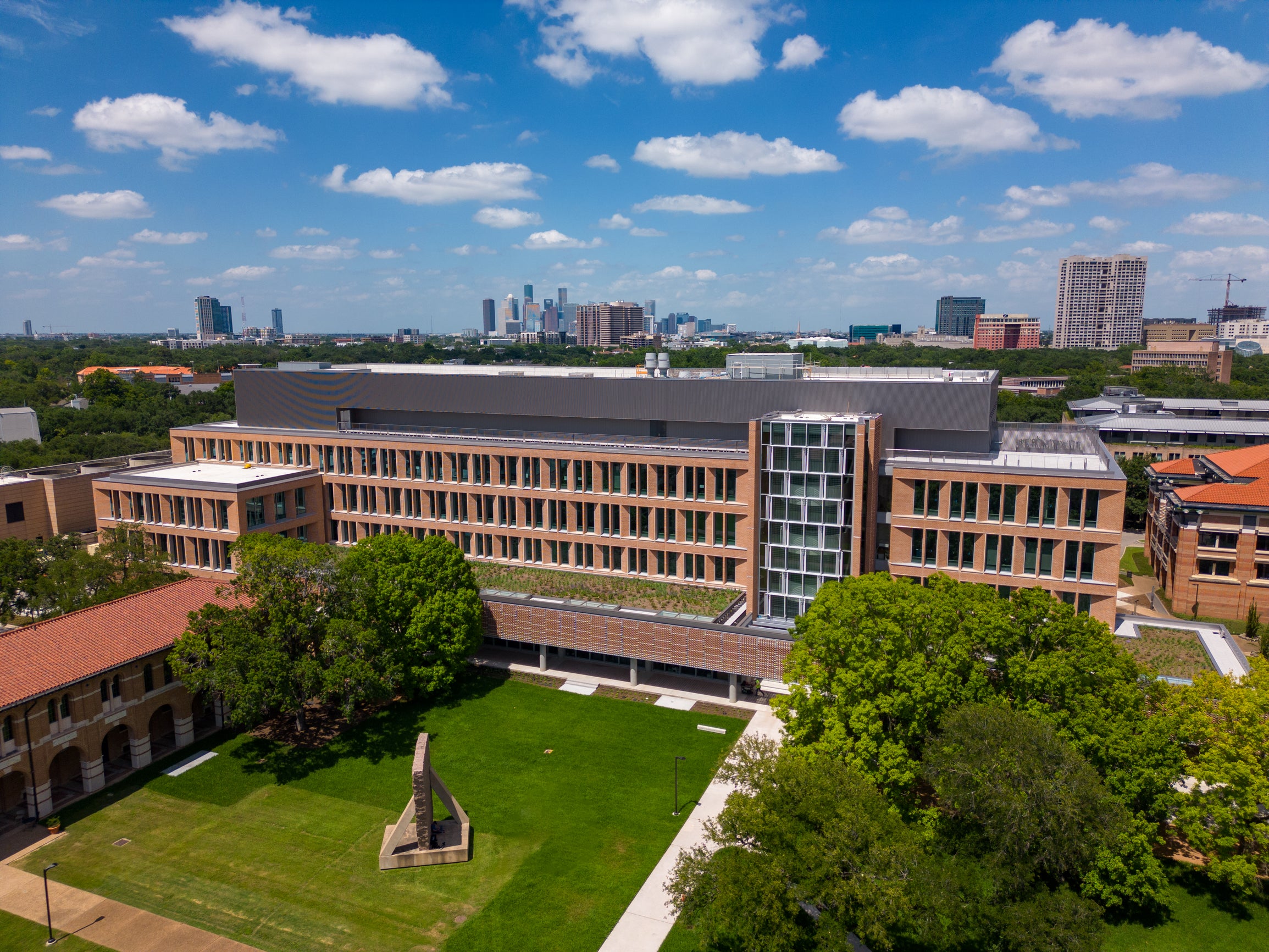
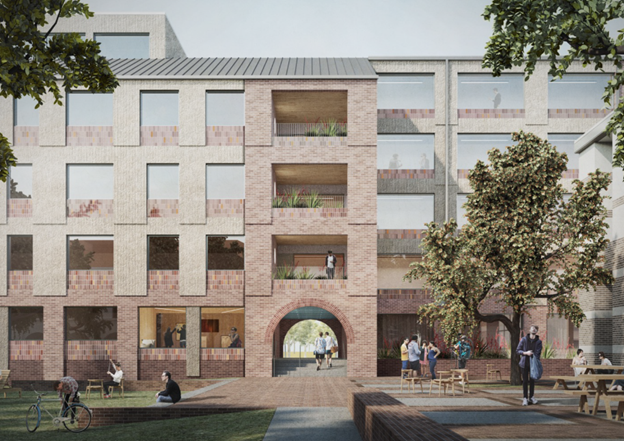
Project: Hanszen College Mass Timber Wing
Project Type: Research Project (ARCH, Housing & Dining, Facilities & Capital Planning, Office of Sustainability, and the Rice Management Company)
Description: Research in low-carbon mass timber structures by School of Architecture faculty Albert Pope and Jesus Vesallo led to an in-depth exploration by leaders from several Rice departments of the viability of constructing a mass-timber addition to a student living facility at Rice. A resulting planning grant from the US Forest Service enabled Rice to commit to using mass timber for what became the new wing of Hanszen College.
Results: The 166-bed, 56,000 square foot mass timber addition of Hanszen College opened in January 2023, and achieved a LEED-Gold Certification through the US Green Building Council. The building is the second mass timber project to be completed in Houston and the first mass timber collegiate housing facility in the state of Texas.
Project: Johnson Owl Deck
Project Type: Course Project (ARCH 450)
Description: The construction of the Hanszen College mass timber wing served as a hands-on case study for students to explore sustainable building practices. Through coursework and collaboration with instructors, students gained practical experience in mass timber construction, engineering, and detailing. The project culminated in the design and construction of the Johnson Owl Deck, a mass timber observation pavilion located at Harris Gully.
Results: Supported by a federal grant and philanthropic gifts to the School of Natural Sciences and the Arboretum Committee, the Owl Deck now serves as a functional outdoor classroom. Professors in the Natural Sciences use the pavilion for field-based instruction, enhancing experiential learning opportunities. The project successfully demonstrated the viability of mass timber in campus infrastructure and fostered interdisciplinary collaboration between architecture, engineering, and environmental science.

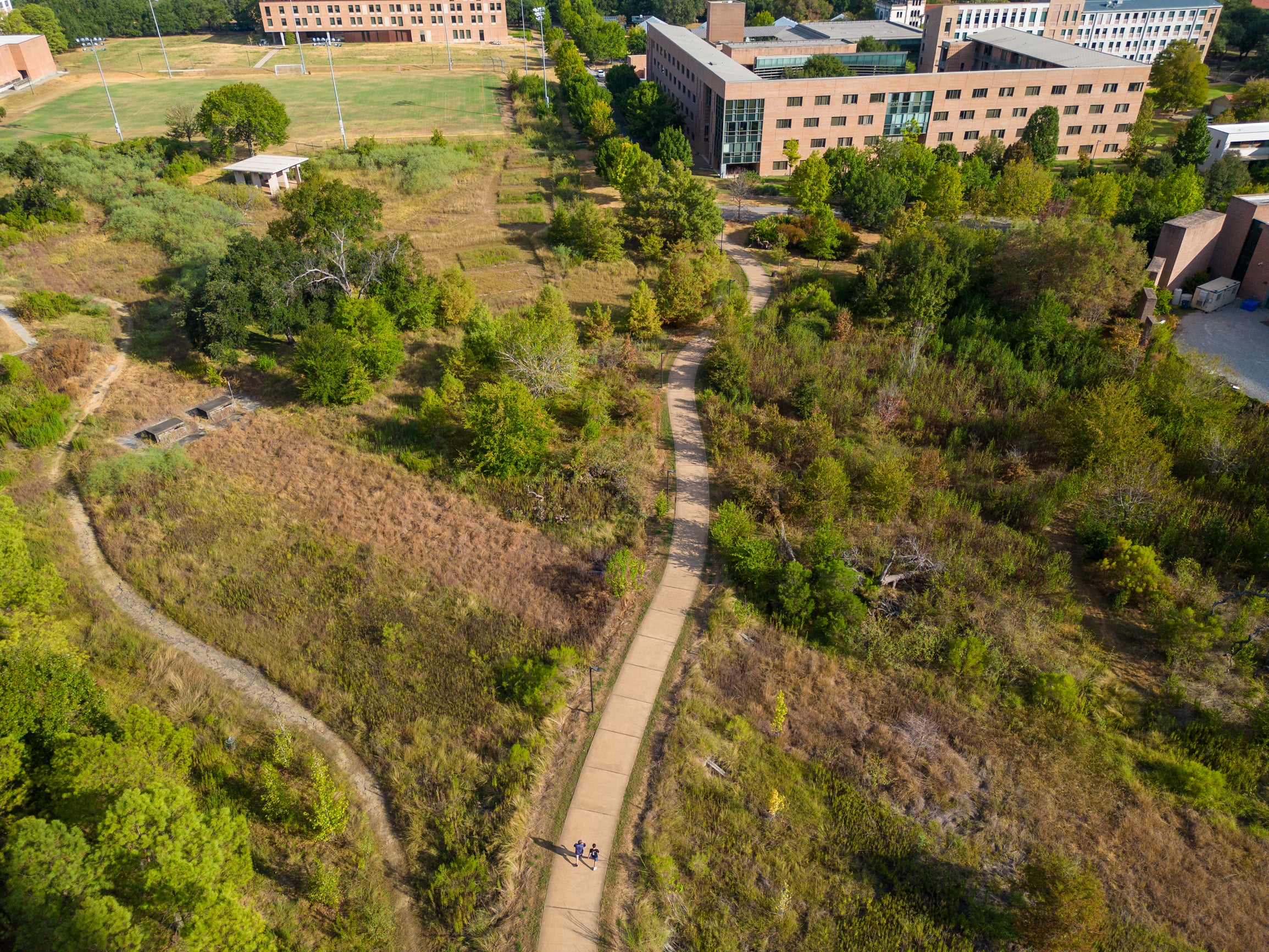
Project: Harris Gully Natural Area (HGNA) Monitoring & Restoration
Project Type: Course Project (BIOS 322/EBIO 324)
Description: Students have played a key role in restoring the Harris Gully an ecologically significant site on campus. Since 2015, students have collected biodiversity data to inform restoration strategies, contributing to prairie and pond revitalization efforts. More recently, students are monitoring a cover crop planted to improve soil health, a technique commonly used in large agricultural settings, but rarely test in urban environments. This work will provide valuable insights for future city rewilding projects.
Results: Student-led monitoring and data analysis have guided major restoration decisions at HGNA, including implementation of prairie and pond restoration plans. The ongoing cover crop study is generating data on soil improvement and ecological resilience in an urban context, offering a model for similar projects nationwide. These efforts demonstrate the impact of experiential learning on sustainability and highlight the role of student research in shaping campus biodiversity initiatives.
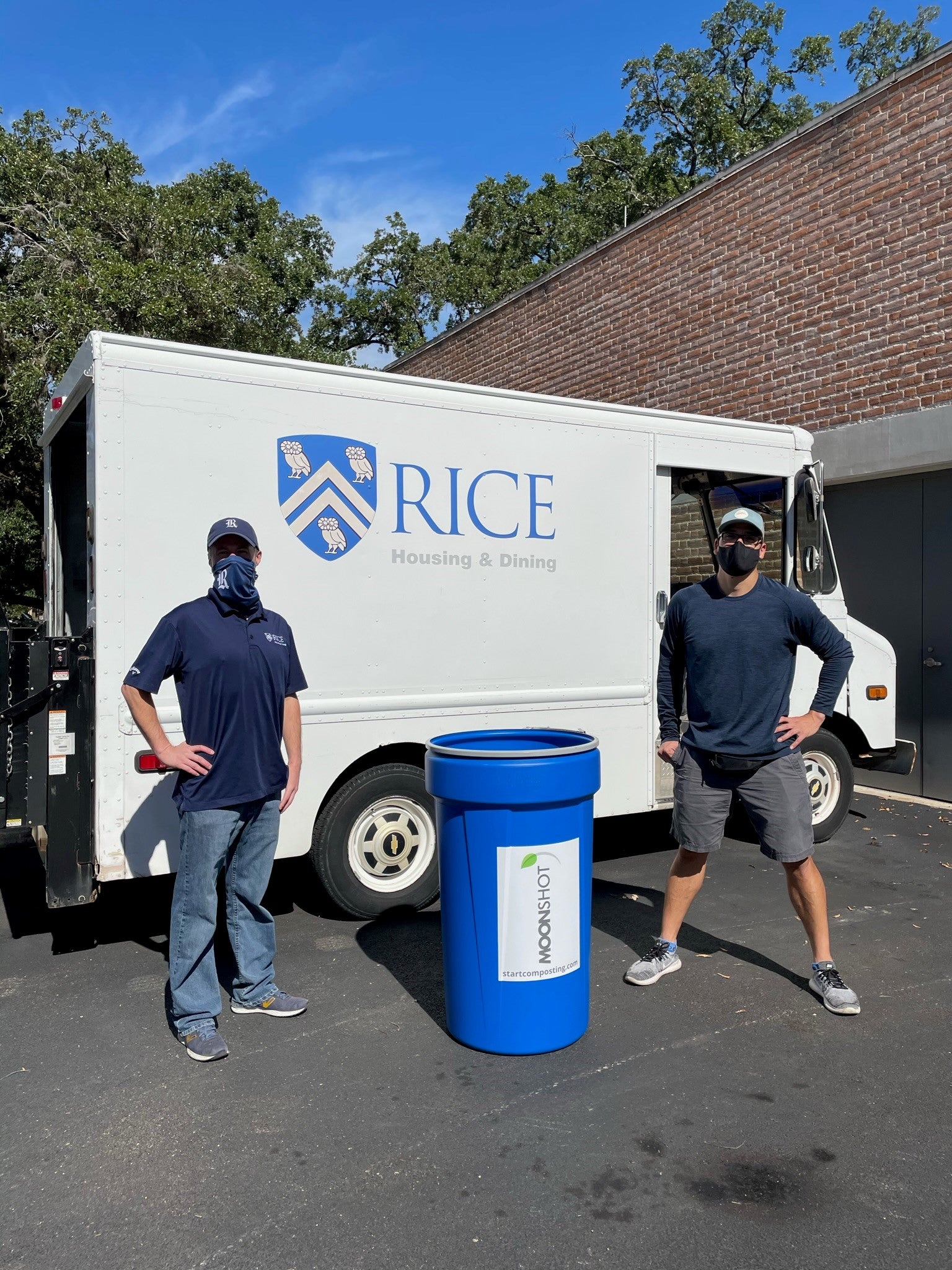
Project: Composting with Moonshot Compost
Project Type: Non-Course Project
Description: Rice University Launched its current composting program in partnership with Moonshot Compost in November 2020 to address the environmental impact of food waste, which accounts for roughly one-quarter of landfill material and generates methane emissions when decomposing anaerobically. The program grew out of collaboration between Housing & Dining and the Office of Sustainability. Moonshot provides collection logistics and data tracking, while Office of Sustainability intern help manage educational outreach, ensuring strong campus engagement.
Results: As of October 2025, Rice has diverted more than 1.64 million pounds of food waste from landfills to composting, significantly reducing methane emissions and advancing the university's sustainability goals. The partnership has transformed food waste into a resource, supported by real-time diversion dashboards that track progress across campus dining locations. Student involvement remains central, fostering a culture of environmental responsibility and continuous improvement.